

Struggling with eczema, acne or skin inflammation that keeps coming back?
If creams and topical treatments have only ever been a temporary fix, it's worth looking at what's happening beneath the surface. Chronic skin conditions are often a signal from your gut — and that's where I start.
Does this sound like your experience?
Eczema or dermatitis that flares unpredictably
Acne that returns despite treatments or medication
Skin that feels reactive — to food, stress or your environment
Redness, inflammation or skin that won't settle
Breakouts that worsen around your period
Gut symptoms that seem to travel alongside skin flares
A feeling that certain foods trigger your skin but you can't pinpoint which
Years of treating the surface without ever addressing the cause
Your skin and your gut are in constant conversation
The gut-skin axis is one of the most significant and underexplored connections in functional health. Your gut microbiome — the trillions of bacteria that live in your digestive system — directly influences how your immune system responds, how much inflammation circulates in your body, and the health of your skin microbiome.
When gut bacteria are imbalanced, the intestinal lining can become more permeable, allowing inflammatory compounds into the bloodstream that then show up in the skin. This is why so many people with chronic eczema, acne or inflammatory skin conditions also have digestive symptoms — or had them as children.
The relationship also works in reverse: stress disrupts the gut microbiome, which worsens skin inflammation, which increases stress. Breaking this cycle is central to how I work.
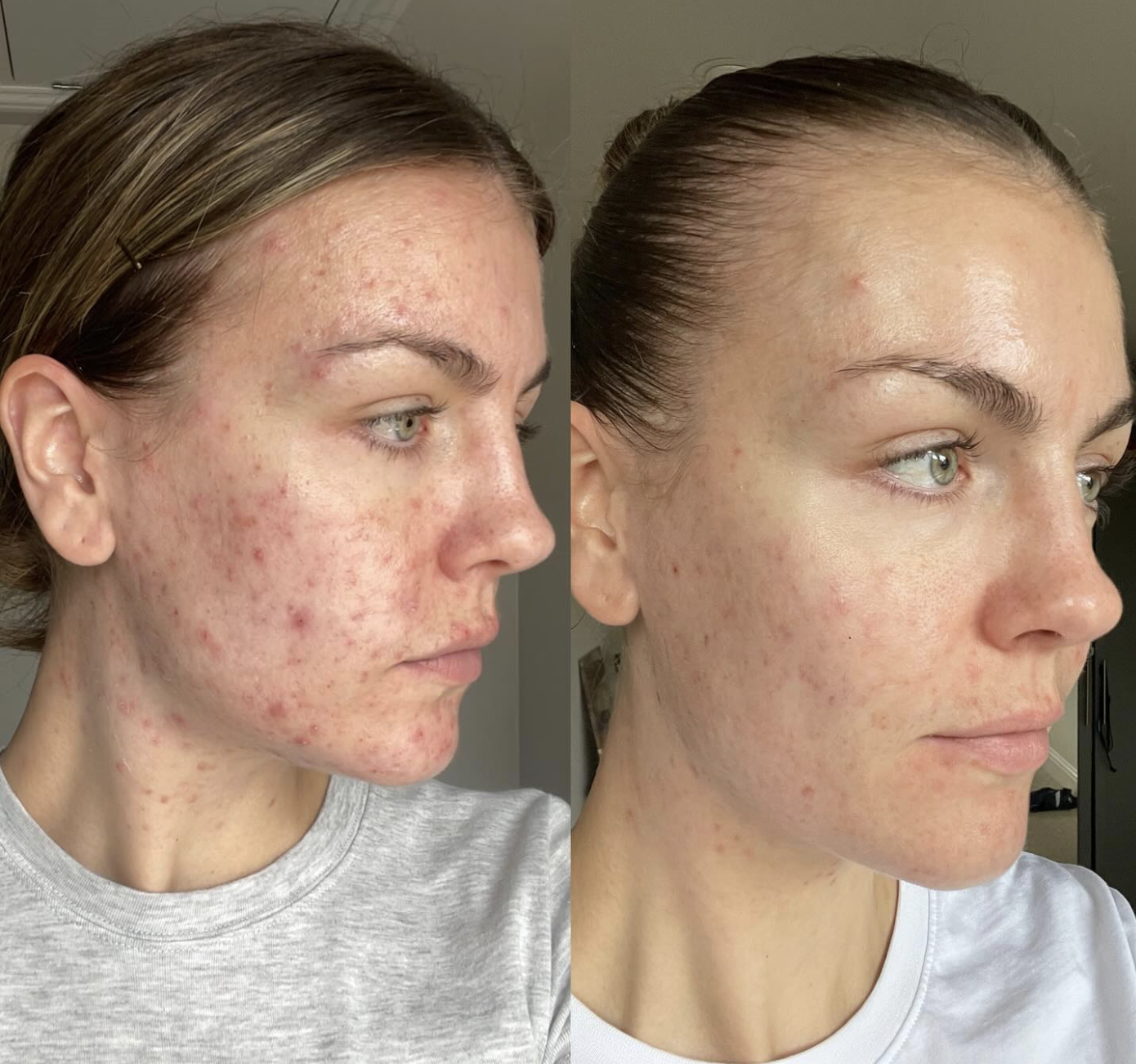
My gorgeous client Meg’s amazing results
(shared with permission)
How I approach skin health from the inside out
Gut microbiome — assessing and restoring balance in the gut microbiome is almost always the foundation. This may involve dietary changes, targeted probiotic and prebiotic support, and in some cases functional gut testing.
Reducing systemic inflammation — identifying and removing dietary triggers for inflammation, supporting the gut lining, and addressing nutrient deficiencies that fuel immune reactivity.
Hormone balance — for hormonal acne specifically, addressing blood sugar, supporting oestrogen clearance via the gut, and reducing androgens through targeted nutrition.
Nervous system and stress — stress is one of the most significant drivers of both gut dysbiosis and skin flares. Your nervous system is part of this picture and I work with it accordingly.
Nutritional foundations — omega-3 fatty acids, zinc, vitamin A, vitamin D and antioxidants all play measurable roles in skin health and are commonly depleted in people with chronic skin conditions.

"I can’t express enough the relief I feel now I’ve finally gotten to the bottom of my skin issues. It genuinely feels like a weight has lifted. For so long this has been such a huge insecurity of mine and I was convinced deep down I could clear the acne holistically - I just needed Molly’s guidance and support and i’m so glad that Google search helped me find her!
Molly, thank you so much for helping me get the glowy skin of my dreams!
— Meg, Bath, Acne
Common Questions
-
Yes, often significantly. Chronic eczema isn't a fixed state — it reflects an ongoing immune and inflammatory response that nutrition can meaningfully influence. Many clients who have had eczema since childhood see real improvement when we address the gut and systemic inflammation, sometimes for the first time after decades of topical treatments.
-
Yes. The gut-skin axis is an active area of research and there is a substantial and growing body of evidence linking gut microbiome health to inflammatory skin conditions including eczema, acne and rosacea. Dermatology and nutritional therapy work from different angles — they're not mutually exclusive.
-
This is one of the most common presentations I see. Rather than long elimination diets, I take a systematic approach to identifying triggers — looking at patterns in your symptoms, your gut health, and where appropriate using functional testing. The goal is clarity, not restriction.
-
A GP or dermatologist will typically address hormonal acne through medication. These can be effective but don't address the underlying hormonal and gut drivers. Nutritional therapy looks at why your hormones are behaving the way they are and addresses those root causes — alongside or instead of medication depending on your situation.
Other Conditions
Gut health and IBS
Hormonal imbalance
Autoimmune support
What if your skin has been trying to tell you something all along?
Book a free 15-minute call. We'll talk through your skin symptoms, what might be driving them from the inside, and whether working together is the right next step.